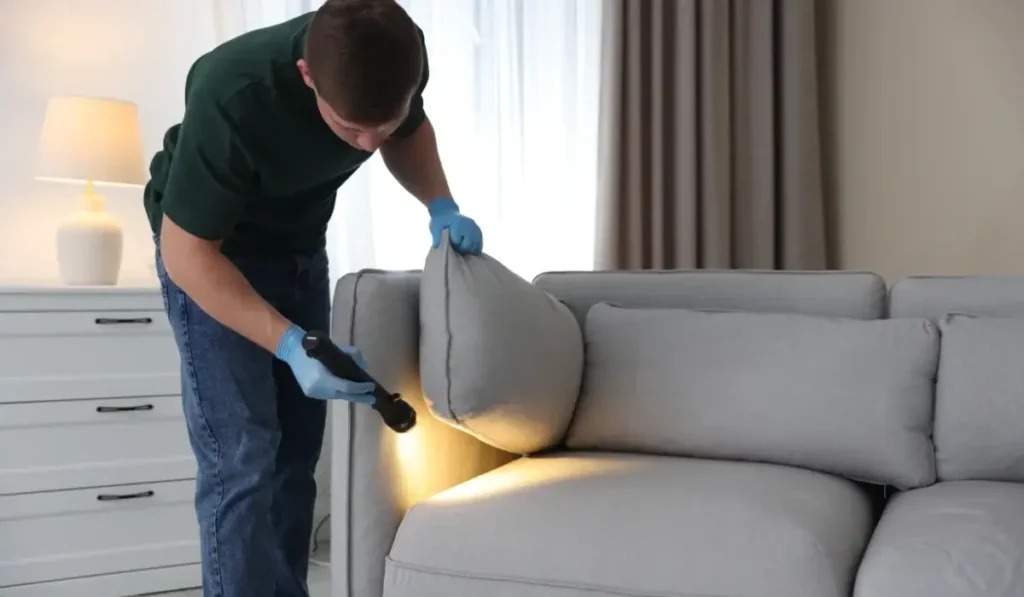
Most people shop for a used couch the same way they shop for a new one: look at the photos, read the description, sit down, decide. That's not enough. A used couch can look great in dim light and feel fine on a quick sit-down while hiding problems — a cracked frame, failing foam, embedded odor — that won't reveal themselves until you've already paid and had it delivered.
This guide covers the six things that actually determine whether a used couch is worth buying. Work through them in order, because each one builds on the last.
- The frame is the only part of a couch that can't reasonably be fixed — everything else is replaceable or improvable
- Cushion foam degrades with use and can't be fully assessed by sitting — you need to press into the base and check rebound
- Smell is the most honest signal of a couch's history — it tells you what a camera and a seller's description can't
- Any piece with musty odor, soft base, or frame flex is a pass regardless of how good it looks
- Asking the right questions upfront saves you from buyer's remorse far more reliably than a long visual inspection
Start with the Frame — It's the Only Thing That Can't Be Fixed
The frame is the skeleton of a couch. Cushions can be restuffed. Fabric can be reupholstered. A broken or failing frame can't be economically repaired once it's in your home, and it gets worse with use — never better.
Here's how to check it properly:
- Lift one corner off the ground. A solid frame should feel rigid. If the opposite corner lifts too — meaning the frame has no structural resistance — it's failing at the joints.
- Sit and shift your weight hard to one side. Then the other. A good frame won't flex, creak, or feel unstable under dynamic load.
- Press on the back. Solid wood or kiln-dried hardwood frames have no give. Particleboard or MDF frames start as fine and degrade into soft, spongy, and eventually splitting. A slightly spongy back is an early sign of this.
- Check the legs. All four (or more) should be firmly attached, not wobbly. Loose legs are a joint failure indicator — not just a cosmetic issue.
Kiln-dried hardwood (oak, maple, beech) is the best. It's dense, moisture-resistant, and holds joints for decades. Softwood (pine, eucalyptus) is fine but less durable over time. Plywood is acceptable and widely used. Particleboard or MDF starts acceptable and declines — avoid it in a pre-owned piece because you don't know how far along that decline is.
Test Cushion Fill and Support — Not Just Comfort
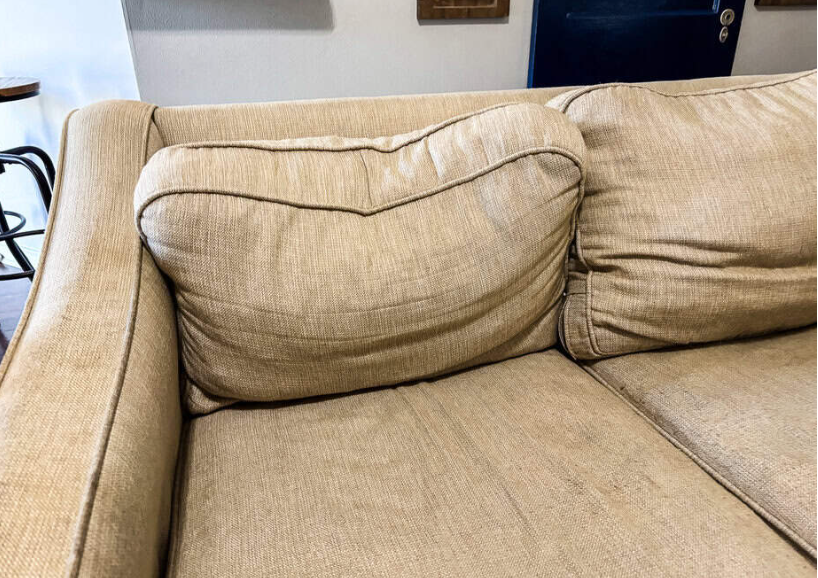
Foam degrades. It's not a matter of if — it's a matter of when and how far along that degradation is when you're buying. New high-density foam is firm, resilient, and rebounds quickly when compressed. Degraded foam is soft, loses shape slowly, and often develops permanent indentations where someone typically sat.
Don't just sit down and see if it feels comfortable. That's not a useful test. Instead:
- Press firmly into the seat base with both hands and release. It should rebound in 3–5 seconds. Slow rebound or no rebound means the foam is breaking down.
- Sit in the spot that was used most — usually the middle of a sofa or the main seat position on a sectional. That's where foam degrades first.
- Check for lumps or hard spots. These indicate broken-down foam or springs that have shifted. Both create discomfort and get worse over time.
- Pull a cushion cover back if possible and look at the foam. Yellow-brown coloring, crumbling edges, or a foam that compresses far too easily under light pressure are all signs of significant age or deterioration.
Cushion replacement is expensive — custom foam cuts for a sofa run $150–$400+ depending on size and density. That cost should factor into your offer if the foam is mediocre but the frame is solid. Good cushion foam on a good frame is the combination you want to find.
Read the Fabric for Its History
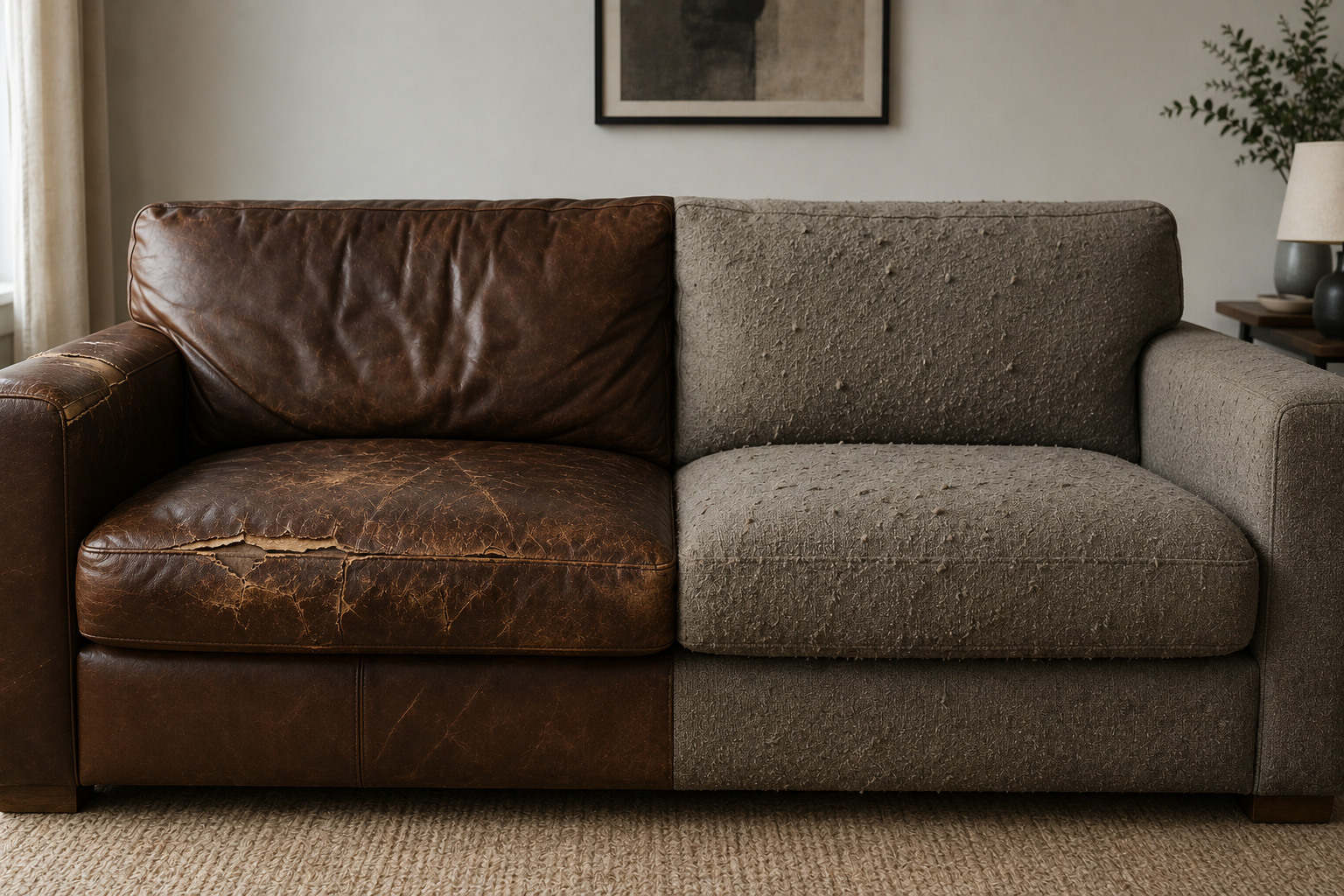
Fabric wears in predictable patterns. The armrests, the front edges of seat cushions, and the headrest area of the backrest are where wear shows first. Understanding what you're looking at tells you whether a piece has been lightly used or heavily used — regardless of what the seller says.
The Smell Test Is the Most Honest Inspection You Can Do
Photos can be edited. Sellers can clean up for a showing. But smell is nearly impossible to fake and very hard to fully mask. It's the most reliable signal of a couch's true condition — and most buyers don't use it properly.
"A properly deep-cleaned couch smells like nothing. If it smells like something — anything — that's information worth paying attention to before you sign off on a purchase."
Don't just stand near the couch and take a quick sniff. Get close to the fabric. Press a cushion down and smell the release of air from inside. Check the underside near the dust cover. Lean into the back. The smell that comes from compressed fabric is the smell of what's actually embedded in the piece, not what's been deodorized at the surface.
- No odor — the ideal. Properly cleaned and fully dried.
- Musty or damp — moisture inside. Possible mold in the foam or frame. Walk away.
- Cigarette smoke — penetrates foam deeply. Rarely fully removed. Walk away.
- Heavy deodorizer spray — something is being masked. Press the cushions, wait 10 minutes, and smell again with a clear nose before deciding.
- Faint pet smell — may be treatable with enzyme cleaner if mild. Strong pet odor means inadequate cleaning — don't expect it to improve at home.
If you're testing multiple spots on the same couch, your nose adapts to the same odor quickly and stops registering it. Step outside, breathe fresh air for 30 seconds, then come back to test again. This resets your olfactory baseline and helps you catch things that seemed normal after a few minutes inside.
Check Every Moving Part and Connection
Recliners, chaise attachments, modular connectors, sleeper mechanisms, pull-out bed frames — every moving part needs to be tested before you commit. These are also the parts most likely to have been used hard and maintained poorly.
- Recline mechanisms — operate them fully in both directions. Listen for grinding, feel for resistance that isn't part of the design, check that they lock in position cleanly.
- Modular sectional connectors — unhook and reattach at least one connection to verify they're functioning. Missing or broken clips are common and sometimes expensive to source.
- Sleeper mechanisms — pull out a sleeper sofa completely if it's included. Check that it unfolds smoothly, sits level, and folds back in cleanly. Check the condition of the mattress — often the weakest part of a sleeper sofa.
- Ottoman hinges and storage lids — open and close fully. Check for soft hinges, bent hardware, or lids that don't sit flat.
- All cushion zippers — open and close every zipper on every cushion. Broken zippers on non-standard sizes are difficult to replace.
If any moving part doesn't function perfectly, assume it'll get harder to operate with time — not easier. Mechanisms seize, they don't loosen. A recliner that's slightly stiff is a recliner that won't open in six months. Factor repair cost into your offer, or move on.
The Right Questions Save You More Than the Right Inspection
A thorough physical inspection tells you the current condition of the piece. The right questions tell you what happened to get it there — and what might be hiding under the surface. These are the questions that separate confident buyers from people who regret a purchase two weeks after delivery.
- Why are you selling it? Most honest answers are "we're moving," "we bought a new one," or "it doesn't fit our new space." Evasive answers or long stories deserve follow-up.
- How was it cleaned, and when? Specific answers ("professional extraction last month") vs. vague ones ("I cleaned it up") tell you a lot.
- Were there pets, smokers, or young children in the home? Not dealbreakers — just relevant to the cleaning level required.
- Has it ever been stored in a garage, storage unit, or basement? Storage environments with humidity are major sources of musty odor and mold that may not be obvious on first inspection.
- Are all original cushions and parts included? Missing cushions from non-standard sectionals are nearly impossible to replace at any reasonable cost.
- Has there been any water damage, flooding, or leaks near where this was kept? Water damage in foam never fully resolves and eventually becomes a mold and odor problem.
The Pre-Purchase Inspection Checklist
We've Already Done This Inspection for You
Every Finity piece is inspected on all six points before it's listed. Frame, cushions, fabric, smell, mechanisms — if it doesn't pass, it doesn't go on the site.
Frequently Asked Questions
-
Lift one corner of the sofa. If the opposite corner rises off the ground too, the frame has lost structural rigidity at the joints. A solid frame stays put. Also sit and shift your weight firmly in both directions — a good frame doesn't creak, flex, or wobble. Finally, press on the back: firmness indicates wood; a soft, spongy feel suggests particleboard that's starting to break down.
-
Press firmly into the seat base with both hands and release — good foam rebounds within 3–5 seconds. Slow rebound, no rebound, or a sinking sensation that doesn't stop means the foam is breaking down. Also sit in the most-used position (usually the center or primary seat) and check for lumps or hard spots, which indicate broken-down foam or shifted springs. If you can access the foam directly under the cushion cover, look for yellowing, crumbling edges, or foam that compresses too easily under light pressure.
-
Check armrests, front seat cushion edges, and the headrest area — these wear first. Light pilling is cosmetic and removable. Thin or shiny spots indicate the weave is breaking down and isn't reversible. Pulls or snags are usually cosmetic unless the weave is structurally torn. Clean intact seams with no fraying are a good sign. Any sign of tearing, significant fading, or structural breakdown of the weave should factor into your offer or be a reason to pass.
-
It depends on the frame and price. Custom foam replacement runs $150–$400+ depending on size and cushion count. If the frame is solid, the fabric is good, and the purchase price plus foam replacement still comes out well below retail — it can be a smart deal. But negotiate the foam cost into the purchase price first. A seller who won't come down given failing cushions is pricing the piece as if it were in good condition, which it isn't.
-
Always ask: Why are you selling it? How was it cleaned and when? Were there pets, smokers, or young children in the home? Was it ever stored outside, in a garage, or in a basement? Are all original cushions and attachments included? Has there been any water damage near where it was kept? Specific, confident answers are good. Evasiveness, vague answers, or unwillingness to let you inspect closely are signs to walk away.