The word "restored" gets thrown around a lot in the secondhand furniture world. Sometimes it means someone wiped it down and relisted it the same day. For us, it means something more specific — a real process that every single piece goes through before it ever gets photographed, listed, or delivered to a customer.
This is how that actually works.
- Where we source furniture — and why we pass on far more than we pick up
- The hands-on inspection we do before anything gets loaded into the truck
- What professional deep cleaning actually involves — and why a home vacuum can't do it
- The structural repairs that make a couch feel solid for years instead of months
- Why our photos show the scuffs and wear — not just the good angles
The Hunt — Where We Find Furniture

We source from estate sales, online listings (Facebook Marketplace, Craigslist, OfferUp), storage unit auctions, and word of mouth from people who already know what we do. We're always looking. That part doesn't stop.
But we don't pick up everything we see. Before anything gets loaded into the truck, we're already screening. Is the piece worth the time, the cleaning cost, and the delivery? Does it have good bones? Is it something our customers actually want? The honest answer, most of the time, is no. We pass on a lot. The ones we do pick up are the ones we already believe in before we lift a finger.
We're selective at the source because that's the cheapest place to be selective. Turning down a bad piece on the spot takes two minutes. Hauling it, cleaning it, and then deciding it's not sellable takes hours — and costs money we won't get back.
The First Look — On-Site Inspection
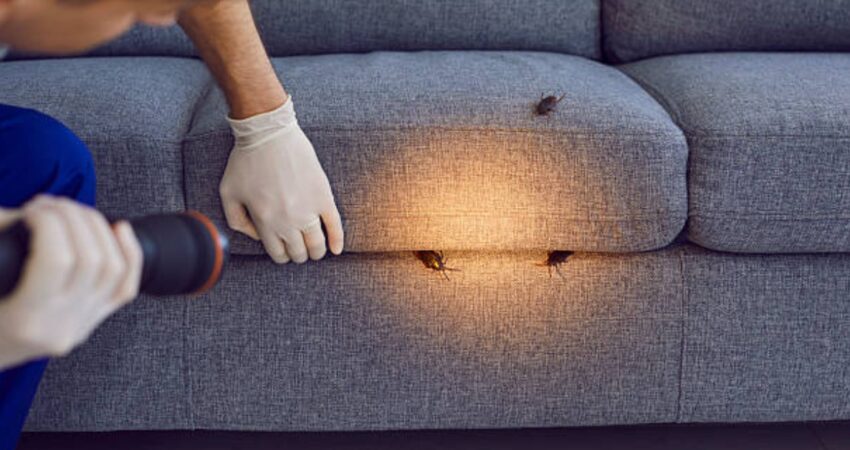
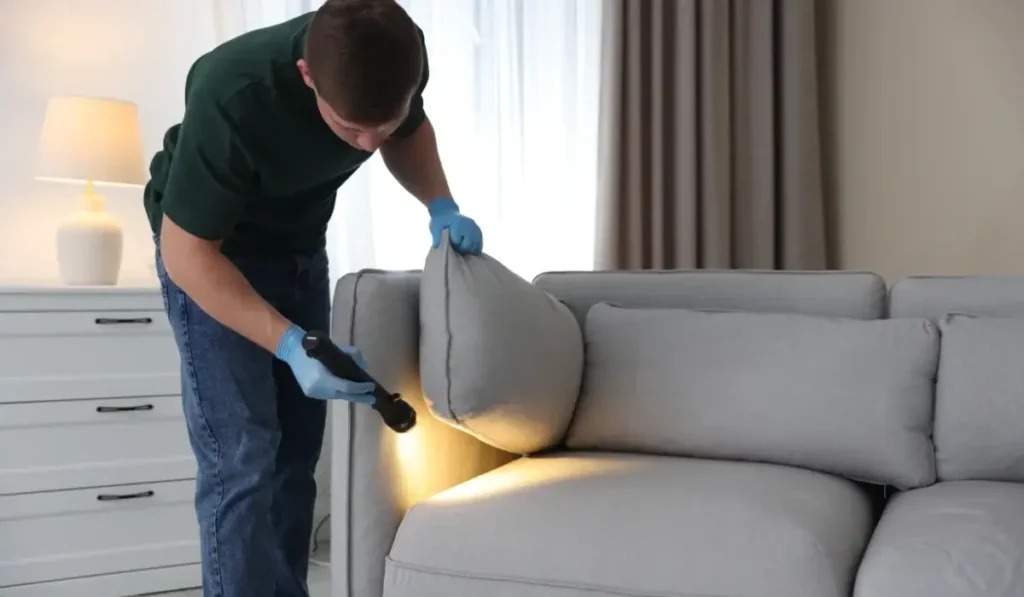
Before anything gets loaded, we do a hands-on inspection right there — whether that's someone's garage, a storage unit, or the side of the road. This isn't a quick glance. We're physically checking the piece.
On-Site Inspection Points
- Frame integrity — push on it. Does it feel solid, or does it flex and shift?
- Spring condition — sit on each section. Even give, or one side collapsed?
- Smell — immediate deal-breaker if there's a serious embedded odor
- Cushion condition — are they salvageable, or compacted permanently flat?
- Fabric or leather — surface stains vs. deeply saturated damage are very different
- Structural wobble — any movement in the frame joints or legs?
If a piece wobbles badly, smells like pet urine, shows mold, or has structural damage we can't realistically fix — we walk away. Right then. We'd rather leave empty-handed than spend hours on something we couldn't stand behind at the end of it.
Deep Cleaning — The Real Work
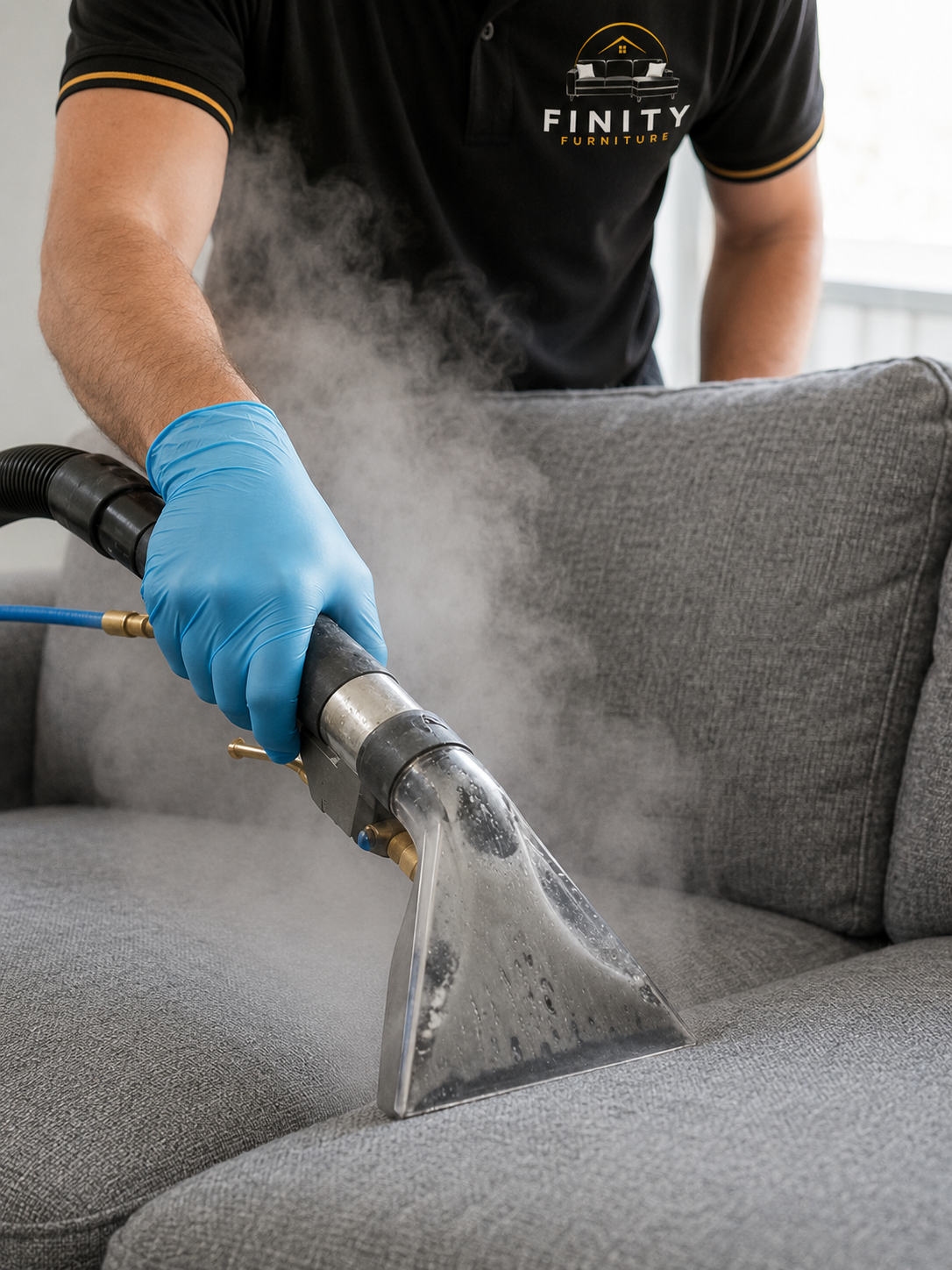
This is where the real work happens. Once a piece is at our location, it goes through a full professional cleaning process. Not a wipe-down. Not a quick vacuum. A full clean.
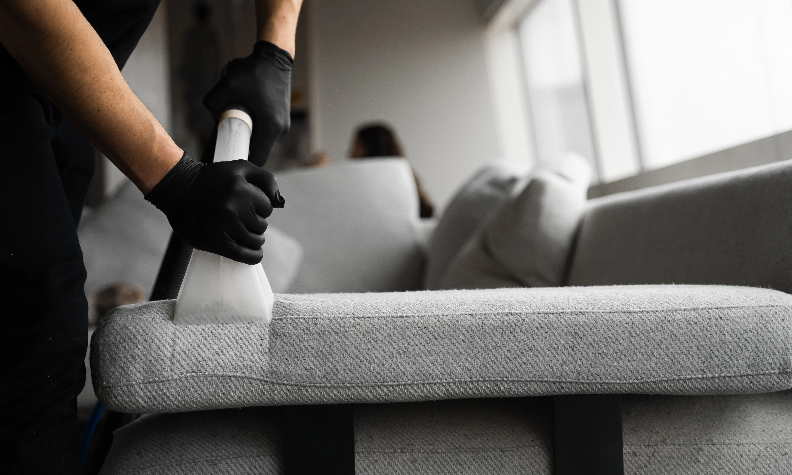
For fabric, that means hot steam extraction — the kind that pulls embedded dust, allergens, and oils out of the fibers from the base up, not just the surface. Enzyme-based treatment for any odors that steam alone won't touch. Full sanitizing and deodorizing. The kind of clean that takes time and equipment most people don't have at home.
"A vacuum picks up surface debris. Steam extraction at professional temperature and pressure reaches into the base of the fibers and pulls out what's been building up in there, sometimes for years."
For leather, we clean the entire surface with a dedicated leather cleaner — not a general-purpose spray — then condition it and address any dry spots or minor surface cracks. Leather that's been sitting in a storage unit for six months needs hydration before anything else.
The cleaning step alone is why a piece from Finity is different from one someone grabbed off Marketplace and resold the same day. The baseline we hand over to a customer is clean in a way a home cleaning can't replicate.
Structural Repair — Making It Solid
Cleaning is step one. The structure is step two. Cleaning a piece that wobbles or sags doesn't fix the wobble.
We go through every piece and tighten anything loose — frame joints, leg hardware, anything that shifts or creaks. Springs get checked and re-tied if they've come undone. If the cushion foam is so flat it won't spring back with your weight off it, we replace it. Legs that are cracked, missing, or broken get replaced too.
We're not rebuilding frames from scratch — that's a different business. But the smaller repairs are what actually matter. A re-tied spring here, a tightened frame joint there, a replaced leg on the corner that was dragging — those are the things that determine whether a couch feels solid and well-made three years from now, or whether it starts feeling cheap after a few months of use.
Older furniture often has better bones than what's built today. Real hardwood frames, heavier construction, denser springs. We're usually tightening — not rebuilding. The structure was already good. It just needs attention.
Final Inspection + Honest Photography

Before a piece gets listed, it goes through one more check. We sit on it. We push on the arms. We go through the whole thing again and make sure everything feels the way it should. If something doesn't pass, it goes back for more work or gets set aside.
Then we photograph it. All of it — not just the good angles.
If there's a scuff on the armrest, you'll see it in the listing. If there's minor surface wear on the leather, we show it. If the fabric has a faded patch on one side from sun exposure, it's in the photos. Our listings are honest because we don't want anyone opening their front door on delivery day and feeling like they didn't know what they were getting.
Restored Doesn't Mean Perfect
It means cleaned, structurally sound, repaired — and honestly represented. Minor cosmetic wear is part of buying pre-owned furniture. We just make sure you see it before you commit, not after delivery. Every listing shows what's there.
What We Turn Away — And Why
Not everything makes it through. Some pieces get rejected at the on-site inspection. Some make it back to us and then don't pass the cleaning or repair stage. Either way, they don't get listed.
- Pet urine saturation into the foam — no amount of cleaning fully removes this. If it's in the foam, the smell comes back. We won't sell it.
- Structural damage requiring frame reconstruction — if the frame itself is cracked or broken beyond tightening and reinforcement, the result still won't hold up.
- Mold — full stop. We don't take chances with this and we don't try to clean it out.
- Severe water damage — warped frames, soaked foam, damaged fabric backing. Too far gone.
- Anything we couldn't feel good about — if we'd look at the finished product and feel uncomfortable selling it, we don't. That's the real filter.
We'd rather leave with nothing than fill the truck with pieces we'd have to stand behind and couldn't.
Every Piece You See Made It Through.
What's in our inventory is what passed — the sourcing check, the on-site inspection, the full clean, the structural repair, and the final check. If it's listed, we stand behind it.
Frequently Asked Questions
-
For us it means hot steam extraction on fabric — professional-grade equipment that reaches into the fiber base, not just the surface. Enzyme treatment for odors. Full sanitizing and deodorizing. For leather, dedicated leather cleaner and conditioner applied to the full surface. It's meaningfully different from what a home vacuum or consumer cleaning spray can do.
-
We go through every piece physically before listing — sitting on it, pushing on the arms, checking that nothing shifts or creaks. The pieces we sell are the ones that feel solid after that check. If something doesn't pass, it doesn't get listed. And older furniture often has better underlying construction than budget retail pieces built today.
-
Possibly — restored doesn't mean brand new. Minor cosmetic wear like surface scuffs or faded areas can be part of pre-owned furniture. What we guarantee is that you'll see it in the photos before you buy. We photograph everything honestly, including any visible wear. No surprises on delivery day is a core part of how we operate.
-
Yes — we're appointment-only, so just reach out and we'll schedule a time. We'd rather you see the piece in person and feel confident about it than have any doubt on delivery day. Bring your room measurements if you have them so we can help you confirm it'll work in your space.
-
We pass on them entirely — either at the on-site inspection or after bringing them in and finding the damage is beyond what we can fix. Pieces we can't stand behind don't get listed, period. We'd rather say no and leave with nothing than fill inventory with things we'd be embarrassed to deliver.