You spent good money on a restored sectional. Maybe you got it from us, maybe you got it somewhere else. Either way, the last thing you want is for it to look tired and worn out six months from now.
Keeping restored furniture looking great isn't complicated. It's mostly about a few consistent habits — the kind that take five minutes a week, not a whole Saturday afternoon. Here are the five things that actually make a difference.
- A quick vacuum once a week — with the right attachment — prevents dust and pet hair from grinding into your fabric over time
- Blot spills, never rub — a spill cleaned in 30 seconds almost never becomes a stain
- Rotate and flip cushions every 2–4 weeks to prevent two spots from wearing out while the rest still looks new
- Direct sunlight fades fabric steadily and dries out leather — keep your sectional at least 2 feet from windows that get afternoon sun
- Scotchgard for fabric (~$10) and leather conditioner every 6 months (~$15–25) are the cheapest insurance you can buy
Vacuum and Wipe It Down Every Week
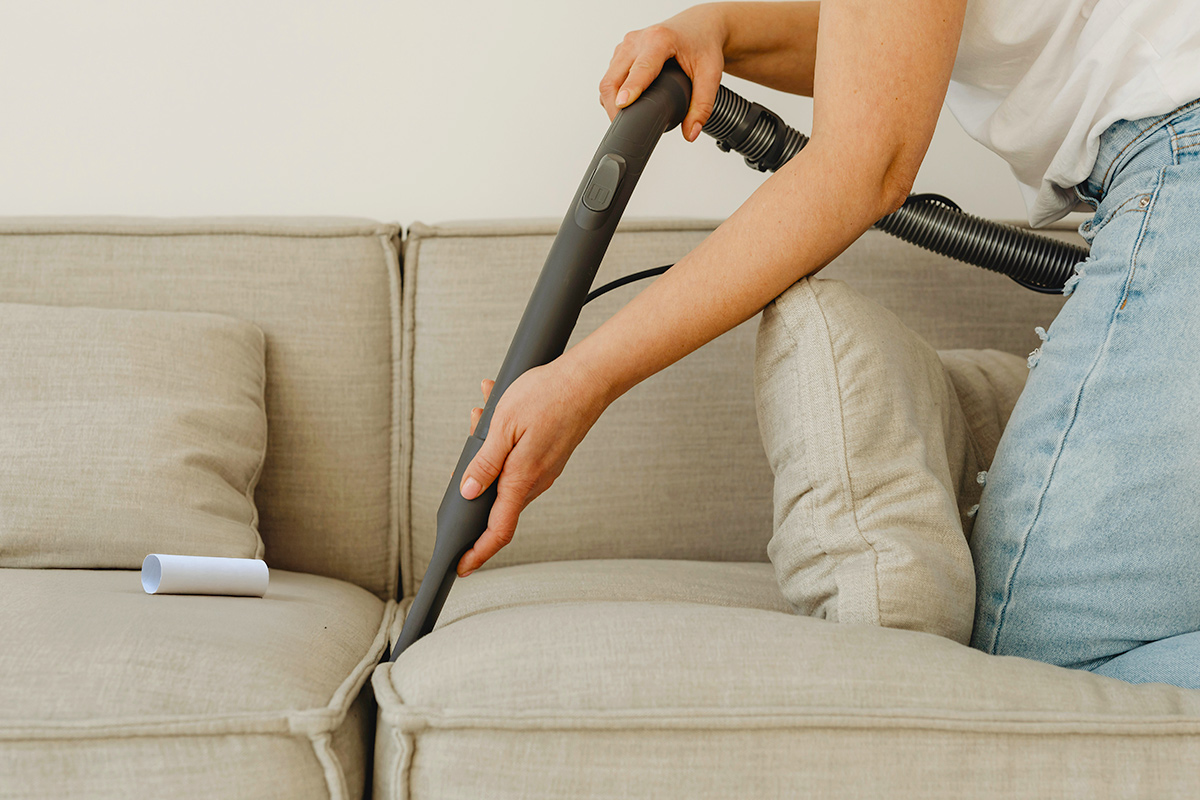
Fabric furniture is basically a dust magnet. Pet hair, crumbs, skin cells — it all settles into the fibers and, over time, grinds away at the material from the inside out. A quick vacuum once a week with an upholstery attachment keeps that buildup from doing real damage.
For leather, skip the vacuum and use a slightly damp microfiber cloth instead. Wipe the whole surface down weekly. Leather doesn't trap particles the same way fabric does, but skin oils and dust build up on the surface and dull the finish over time if you just let them sit there.
The crevices get skipped almost every time — between cushions, under armrests, along the back seam. That's where most of the real buildup happens. Work the attachment into those gaps when you vacuum.
Attack Spills in the First 30 Seconds
A spill that gets cleaned up in the first 30 seconds is almost never a stain. A spill you get to an hour later is a project. Speed matters more than anything else here.
"Blot, don't rub. Rubbing pushes the liquid deeper into the fibers and spreads it wider. Blotting lifts it out."
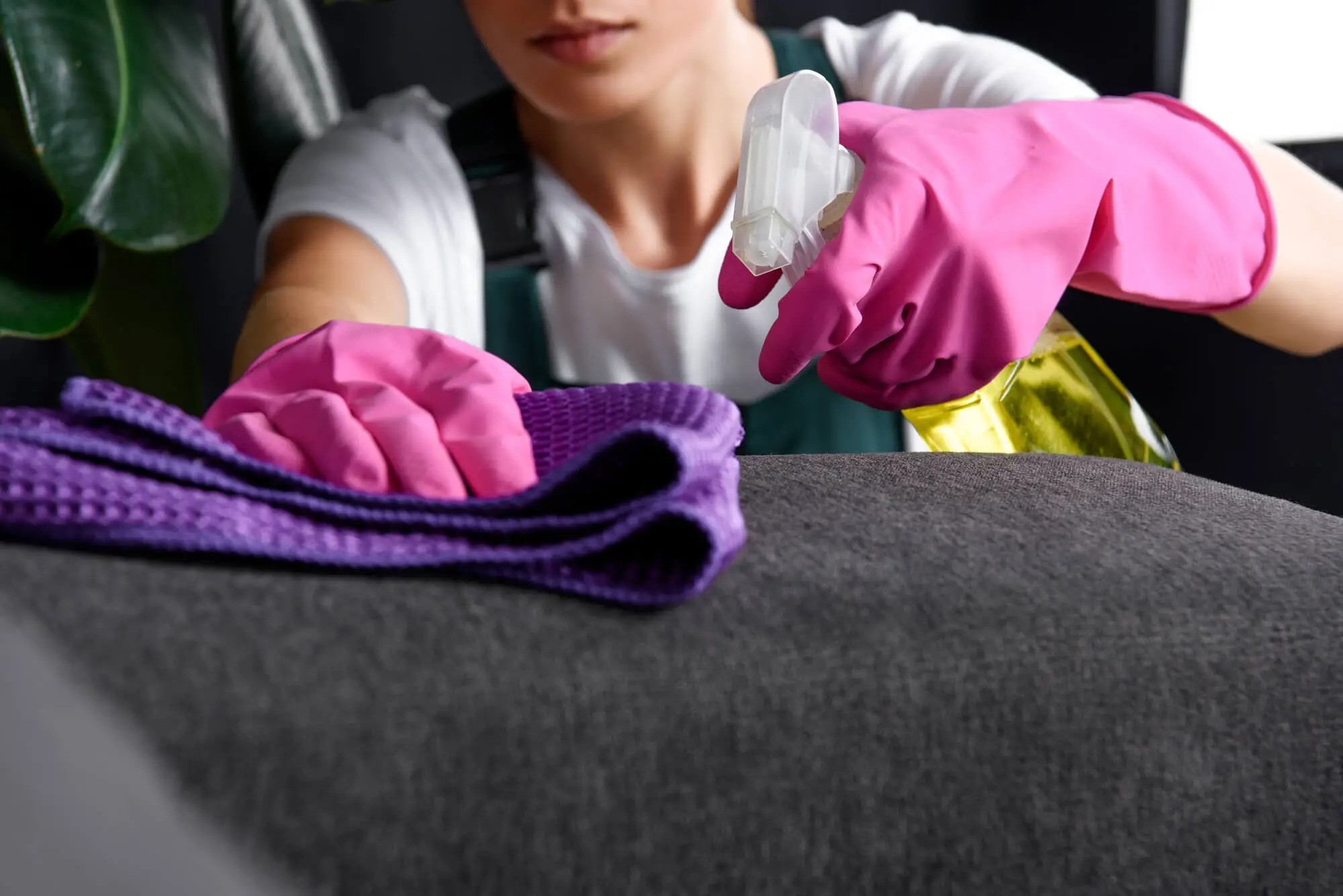
Grab a clean cloth, press firmly, and work from the outside edge of the spill inward toward the center. That technique stops it from spreading as you clean. Don't scrub in circles — straight down, lift, repeat.
For Fabric
Blot up as much liquid as you can first. Then mix a small amount of mild dish soap with cold water and dab it into the spot — dab, not scrub. Follow with a dry cloth to pull the moisture back out. Let it air dry completely before anyone sits on it. Sitting on damp upholstery compresses the fibers while they're vulnerable.
For Leather
Blot immediately with a dry cloth and stop there. Don't use plain water on leather — it can leave a ring. A dedicated leather cleaner is the right tool. If you don't have one, a very slightly damp cloth will work as a first response, but follow it up with conditioner once it dries.
- Never rub a spill — always blot straight down and lift
- No bleach, ever, on any upholstery — it destroys fibers and discolors leather permanently
- Avoid harsh chemical cleaners — they break down fabric fibers and strip the oils out of leather
- Don't use hot water on fabric spills — it can set certain stains and shrink fibers
- Don't use dish soap on leather — the detergents dry it out fast
Rotate and Flip Your Cushions Every Few Weeks
This one's easy and almost nobody does it. Your sectional gets used in the same spots over and over — whoever has the "good seat" knows who they are. Over time, those spots compress faster than the rest. You end up with two flat spots and four cushions that still look like new.
Rotating and flipping your cushions every two to four weeks evens out that wear so the whole couch ages at the same rate. If your cushions are reversible, flip them over too. If not, just rotate positions — left to right, middle to ends, and so on. It takes about two minutes. The difference over a year of use is real and noticeable.
Set a reminder on your phone. Seriously — rotate cushions the first Sunday of every month and you'll never have to think about it again. Two minutes once a month adds years to the life of your cushions.
Keep It Away from Direct Sunlight and Heat Vents

This is the one that does the most invisible damage. You don't see it happening — but you'll notice it eventually. UV light fades fabric steadily and quietly. Six months of afternoon sun through a window and you'll have a noticeably lighter patch on one side of your couch while the rest still looks fine.
For leather, sunlight is even more destructive. UV dries out the natural oils in the leather, which causes it to crack over time. A cracked leather sofa is very hard to bring back — conditioning can slow it down, but it can't fully reverse deep cracking.
Heat vents are the other culprit people don't think about. Hot dry air does to leather what sunlight does — strips the moisture right out of it. If your sectional is sitting directly over a floor vent, the heat blowing up through the cushions is aging the leather faster than almost anything else you could do.
Try to position your sectional at least 2 feet from any window that gets direct afternoon sun. Keep it away from floor vents and radiators. If rearranging the room isn't an option, a UV-blocking window film is inexpensive and does a solid job — you can find it at most home improvement stores.
Protect It Before You Need To
The best time to protect your furniture is before it needs it. This one tip alone is worth more than everything else on this list combined, because protection applied upfront prevents damage that would otherwise be expensive or impossible to fix.
For Fabric: Scotchgard or Similar Fabric Protector
A spray-on fabric protector is one of the best investments you can make. Apply it before you use the sectional — or as soon as you bring it home. It doesn't make the fabric stain-proof, but it gives you a bigger window of time to blot a spill before it sets into the fibers. A can of Scotchgard runs about $10. Reapply every year or two, or any time after a professional cleaning strips the coating off.
For Leather: Conditioner Every Six Months
Leather conditioner replenishes the oils in the leather so it stays supple and flexible instead of drying out and cracking. Apply it every six months — more often if you live in a dry climate or run your heat a lot in winter. A good conditioner also adds a small amount of water resistance as a bonus. Budget $15–25 for a quality product; the cheap stuff works, but good conditioner noticeably extends how long the leather looks great.
Both products combined cost less than $35 total. That's the cheapest insurance you'll ever buy for a piece of furniture worth hundreds or thousands of dollars.
Quick Care Reference by Material
Bookmark this or screenshot it. Everything you need to know in one place.
| Material | Weekly Routine | Spill Response | Protection | Watch Out For |
|---|---|---|---|---|
| Fabric | Vacuum with upholstery attachment, especially crevices | Blot immediately, mild dish soap + cold water, air dry | Scotchgard spray — apply fresh, reapply yearly | Rubbing spills, hot water, harsh cleaners, direct sun |
| Leather | Damp microfiber wipe-down, full surface | Blot dry only — no water. Leather cleaner, then condition after | Conditioner every 6 months (more in dry climates) | Direct sun, heat vents, dish soap, water stains, skipping conditioner |
| Microfiber | Vacuum weekly, brush nap with soft brush to restore texture | Warm water + mild soap, blot and let air dry fully | Fabric protector spray — tightly woven so less absorbs | Harsh scrubbing (flattens nap), soaking with too much water |
Get a Professional Deep Clean Once a Year
Once a year, a professional upholstery cleaning makes a real difference — especially for fabric sectionals with heavy daily use. It pulls out the deep-down buildup that a vacuum just can't reach: embedded dust, allergens, oils that have worked their way into the base of the fibers over months of use. If you bought your sectional from Finity, it already went through a professional clean before delivery. That's your starting point. Your job is to maintain from there — and an annual professional clean keeps that baseline going year after year.
Ready for a Sectional That Starts Clean?
Every piece we sell is professionally deep-cleaned, structurally inspected, and ready for same-day delivery in the Yuba City area. Your job is just to keep it that way.
Frequently Asked Questions
-
Every six months is the standard recommendation for most climates. If you live somewhere dry, run your heat a lot in winter, or your sofa is near a vent or window, condition it every three to four months instead. You'll notice when the leather starts feeling slightly stiffer or less supple — that's the cue to condition sooner.
-
Absolutely — Scotchgard is safe on fabric upholstery and one of the most effective things you can do. There's nothing special about restored furniture that changes this. Apply it to a clean, dry surface, let it cure for the time listed on the can, and don't sit on it until it's fully dry. That's all there is to it.
-
Maybe not. Blot what's left right now to pull out any remaining moisture. Then let it dry completely before trying anything else — working on a wet stain usually makes it worse. Once dry, try a small amount of dish soap and cold water, dab carefully, blot up, and air dry again. Stubborn stains after that typically need a professional upholstery cleaner.
-
The upholstery attachment — the flat, wide one with the fabric strip along the front edge. It's gentler on the fabric than a hard plastic floor nozzle and lifts debris without pulling on the fibers. The crevice tool (the narrow one) is your second best friend for getting into the seams between cushions where most of the buildup collects.
-
The material is listed in your item's description. If you're not sure, just text or call us — we know every piece and can tell you exactly what you're working with. For care purposes, treat faux leather similarly to real leather: wipe weekly, condition every six months, and keep it away from heat and direct sun. Faux leather is actually more sensitive to heat damage than genuine leather.