Most people fall in love with a sectional before they ever pick up a tape measure. The couch looks perfect online, the price is right — then delivery day comes and it barely makes it through the front door. Or it fits, but now there's six inches between the armrest and the wall and no room to walk.
We've seen it happen dozens of times. Honestly, it's one of the most common calls we get the day after delivery. Here's the thing though: it's completely avoidable. Choosing the right sectional comes down to a handful of measurements and knowing what those numbers actually mean. Spend 20 minutes on this before you start browsing and you'll save yourself a whole lot of stress.
- Measure your room before you look at a single listing — this one step eliminates most mistakes
- Leave at least 18 inches of walkway clearance on any side people walk past
- L-shapes work in rooms as small as 10×12 ft — U-shapes need at least 12×14 ft or they'll overwhelm the space
- Check your front door and every hallway before delivery — you need at least 32 inches of clearance
- Restored sectionals at Finity start at $650 — most of what we carry originally retailed for $1,500–$3,500
The #1 Mistake: Shopping Before You Measure
It sounds obvious when you say it out loud. But the number one mistake people make buying a sectional is falling in love with a specific couch before they know what'll actually fit in their space. We're not judging — sectionals are easy to get excited about. Big, comfortable, great-looking in the photos.
But the living room in the listing isn't your living room. Their couch might be sitting in a 15×20-foot open-plan space. Yours might be 11×13 with a doorway on one side and a window on the other. Those are fundamentally different situations.
"Measure first, browse second. Even rough numbers will immediately filter out 80% of the sectionals that were never going to work in your space anyway."
The fix is simple: measure first, then shop. Even rough numbers tell you a lot. If your room is 12 feet wide and you need 18 inches of walkway on each side, you're already ruling out anything wider than about 105 inches — and that's a massive filter.
How to Measure Your Room for a Sectional
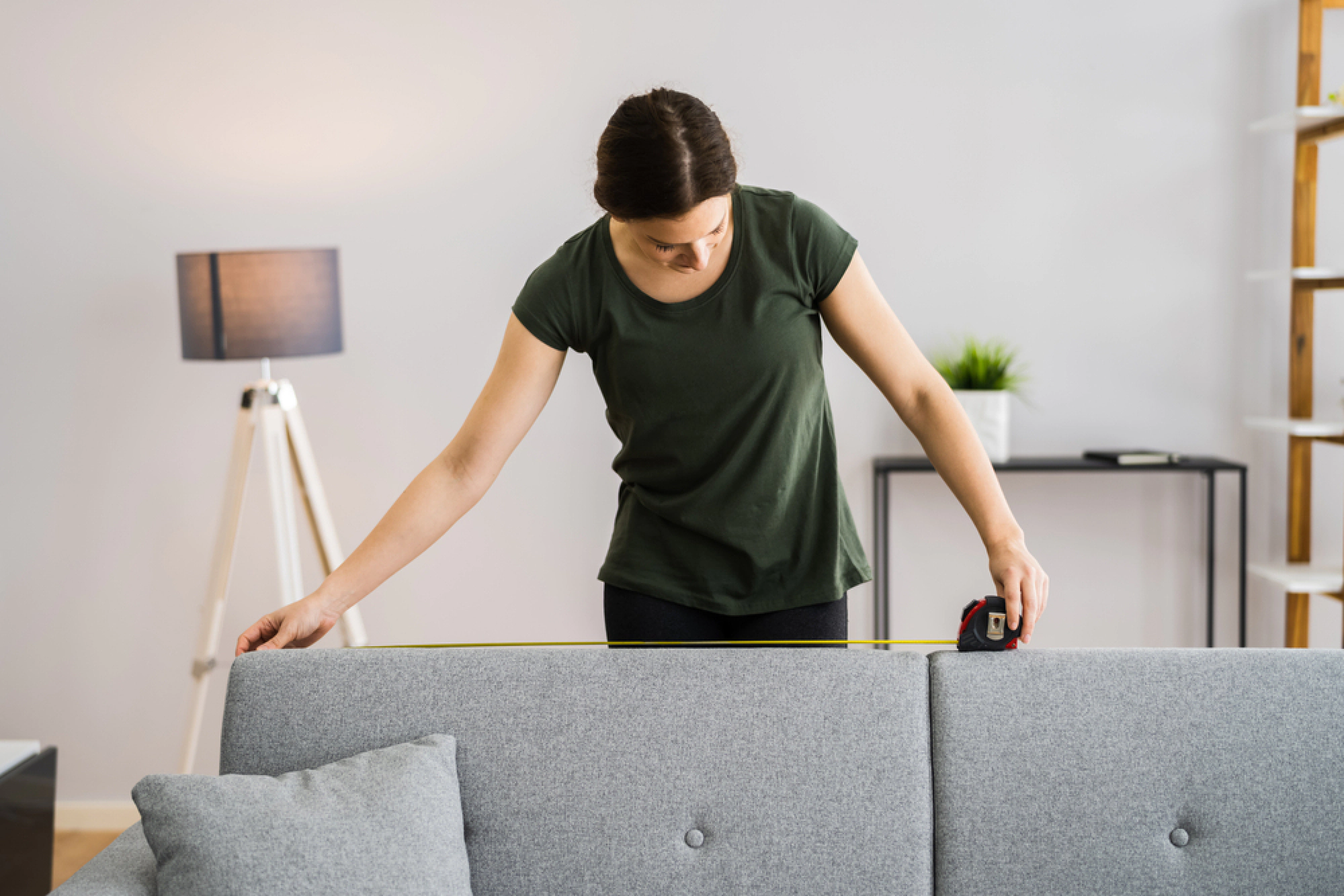
Grab a tape measure and do this before you look at anything else. The goal is to define your "couch zone" — the actual area where the sectional will sit, with room left over for walkways, a coffee table, and a little breathing space so the room doesn't feel suffocated.
-
1Measure the full room
Get the total width and length of your living room. Write them down — don't trust your memory. These numbers are everything.
-
2Sketch a rough layout
Draw a rectangle on paper, mark where the TV is, where the doors open, where the windows sit. You don't need to be an artist — just a quick map so you can visualize the space.
-
3Define your usable couch zone
Start with the room dimensions and subtract: at least 18 inches on any side where someone walks, 18 inches between the sofa and the coffee table, and a couple inches from walls — couches pushed flush look awkward and can scuff the paint over time.
-
4Check door and hallway clearances
Measure your front door width and every hallway between the entrance and the room. Most sectionals come in 2–4 separate pieces, so they don't have to move as one unit — but individual sections can still be 7–8 feet long. You need at least 32 inches of clearance. 36 is more comfortable.
Measure These 6 Things Before You Buy Anything
- Room width & length
- Usable couch zone (width × depth)
- Front door width
- Narrowest hallway width
- Distance from couch to TV wall (aim 6–8 ft min)
- Walkway clearance each open side (18" min)
L-Shape vs. U-Shape: Which Configuration Is Right for You?
Once you've got your measurements, the shape question gets a lot easier to answer. L-shaped sectionals are the most versatile — they fit the widest range of rooms. U-shapes look incredible but they need serious square footage or the room just feels like one giant couch.
L-Shaped Sectionals
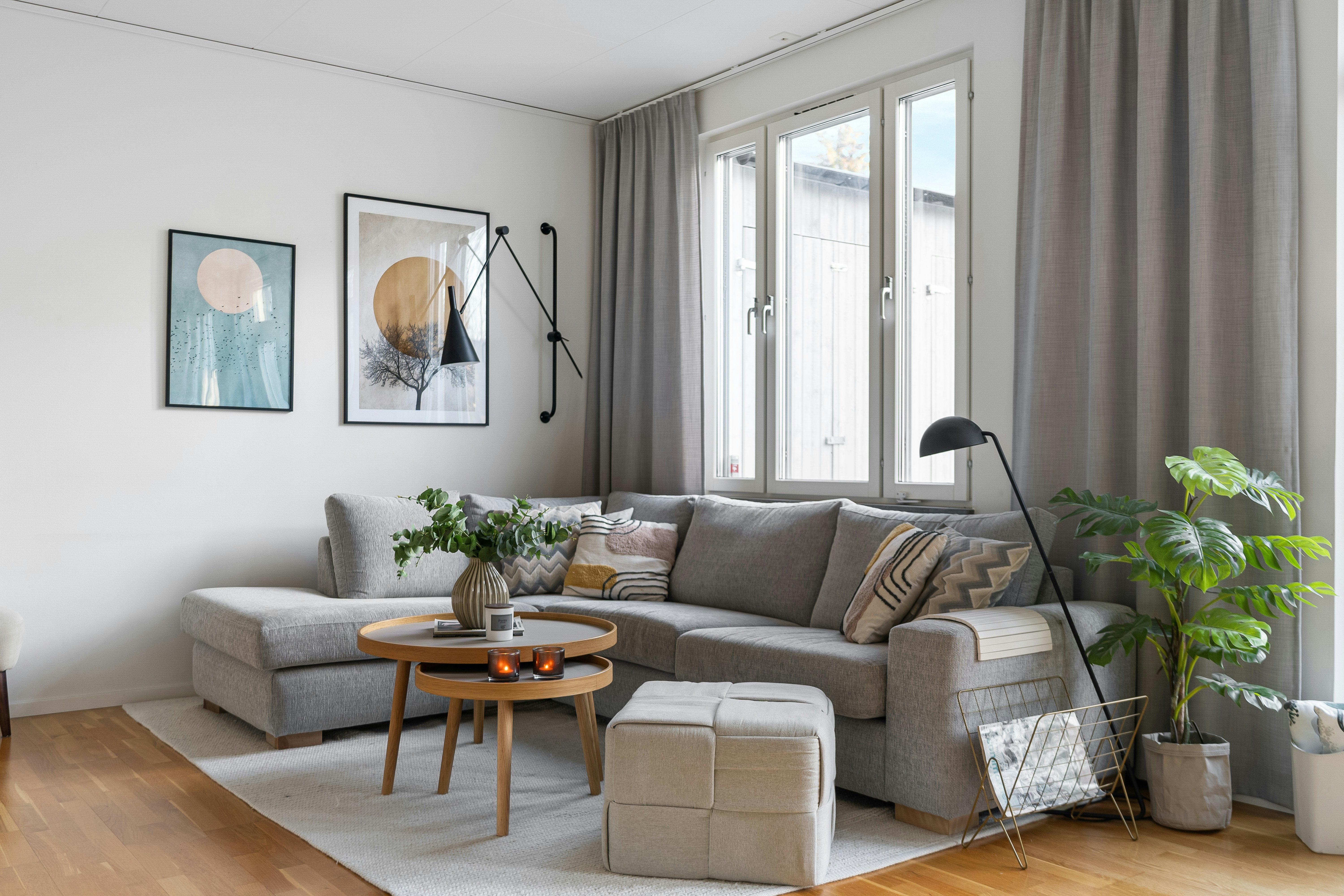
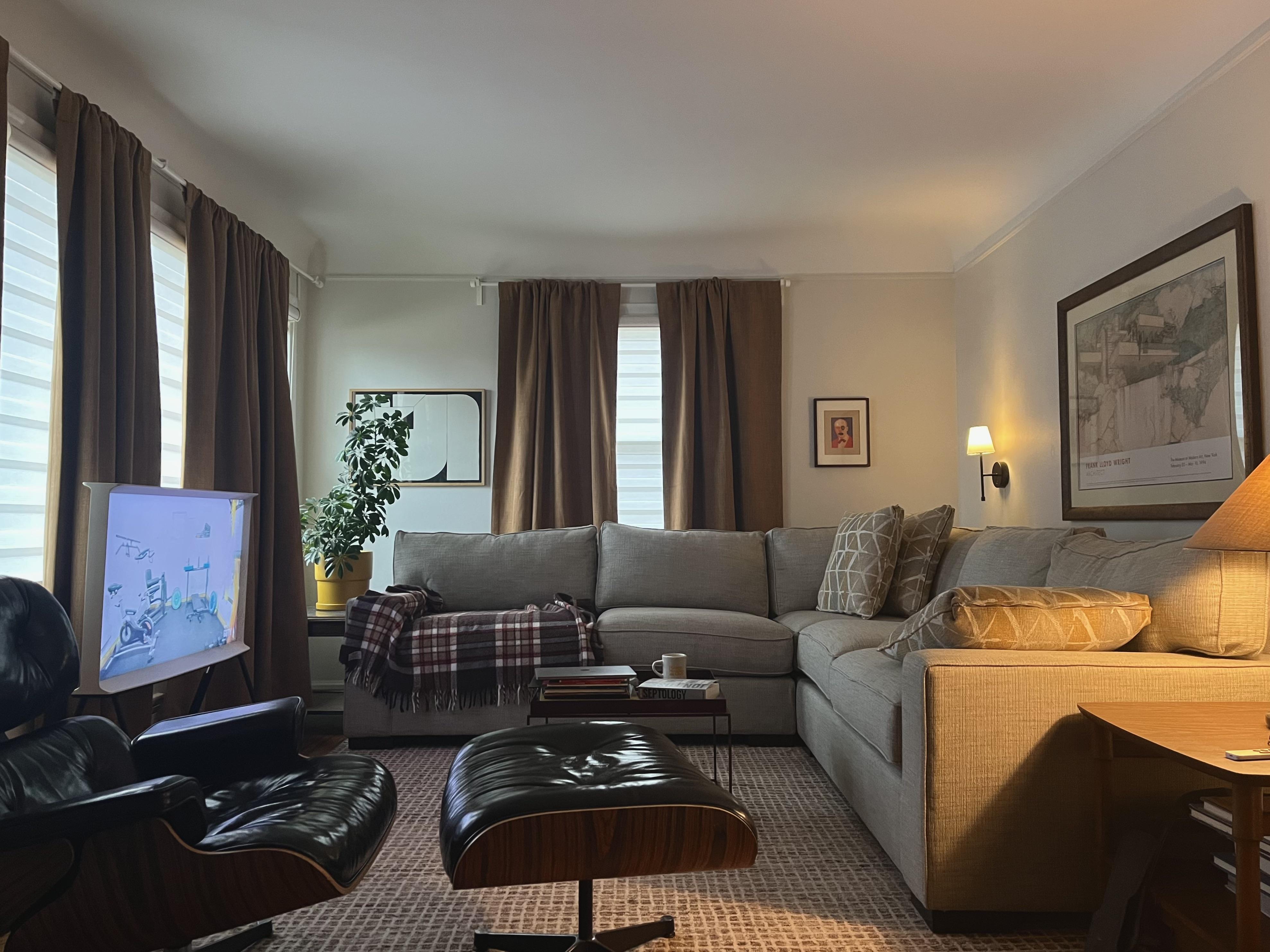
An L-shape has two sections that meet at a 90-degree corner — one is the main sofa, the other is the chaise or "return." Most L-shapes measure 90 to 130 inches on each side. They work well in rooms 10×12 ft and larger, which covers most standard living rooms, apartments, and open-plan spaces. If you're unsure what shape to get, start here.
U-Shaped Sectionals
A U-shape wraps around on three sides — think horseshoe seating. Great for families, great for movie nights, genuinely great for anything involving a lot of people on one couch. But they need room. In a space smaller than 12×14 ft, a U-shape will make the whole room feel like you're sitting inside the furniture. You really want 12×14 ft at minimum, and ideally 14×16 ft or more.
Left-Facing vs. Right-Facing — What Does That Actually Mean?
This one trips people up constantly. Here's the clearest way to think about it: stand directly in front of the sectional, facing it as if you're about to sit down. If the chaise extends to your left, it's left-facing. To the right, right-facing.
Quick rule: Stand at your room's entrance, facing where the sectional will go. The chaise should point toward the nearest wall or corner — not across the middle of the room where it'll block foot traffic. That direction tells you exactly which facing to buy.
Matching the Configuration to Your Specific Room

Here's how to think through some of the most common layouts:
- Long, narrow room (e.g., 10×15 ft): Main sofa along the long wall, chaise on the short end. This keeps the center of the room open for traffic flow.
- Square room (e.g., 12×12 ft): An L-shape works perfectly here. If you're at 13×14 ft or larger, a compact U-shape might just fit — measure carefully.
- Open floor plan: More flexibility, but a U-shape actually shines here — the back of the sectional acts as a natural room divider and helps define the living area without walls doing the work.
- Room with a fireplace or focal wall: Orient the main sofa to face the TV or fireplace directly, with the chaise going toward whichever side wall doesn't have traffic passing by it.
The Delivery Reality Check — Don't Skip This Step
We've made a lot of deliveries. Most go smoothly. The ones that don't almost always come down to entry points nobody thought to check ahead of time. It's not the couch — it's the doorway.
Before you confirm your delivery, look at these four things:
- Front door width: Standard exterior doors are 36 inches, but a lot of homes — especially older ones in the Yuba City area — aren't standard. Measure yours before assuming.
- Hallway width and turns: A straight hallway is usually fine. A hallway with a sharp 90-degree turn at the end is a completely different situation. Think about how a 7-foot couch section physically moves around that corner.
- Stairwells: If you're above the ground floor with no elevator, let us know before delivery day. We've gotten sectionals up staircases — but it depends heavily on the width and number of turns.
- Elevators: If your building has one, check the interior dimensions, not just the door width. Some elevators have a wide door but aren't deep enough for a long couch section.
When you're not sure if something will fit through, just call or text us before the delivery date. We'd much rather figure it out ahead of time than stand in your doorway with a 200-pound couch section and no good plan B.
Leather vs. Fabric: What Works for Your Day-to-Day Life?
The shape matters. The size matters. But the material might matter more than both when it comes to how happy you are with the sectional six months from now. Getting this wrong means you're either fighting pet hair every day or sweating through every summer movie night.
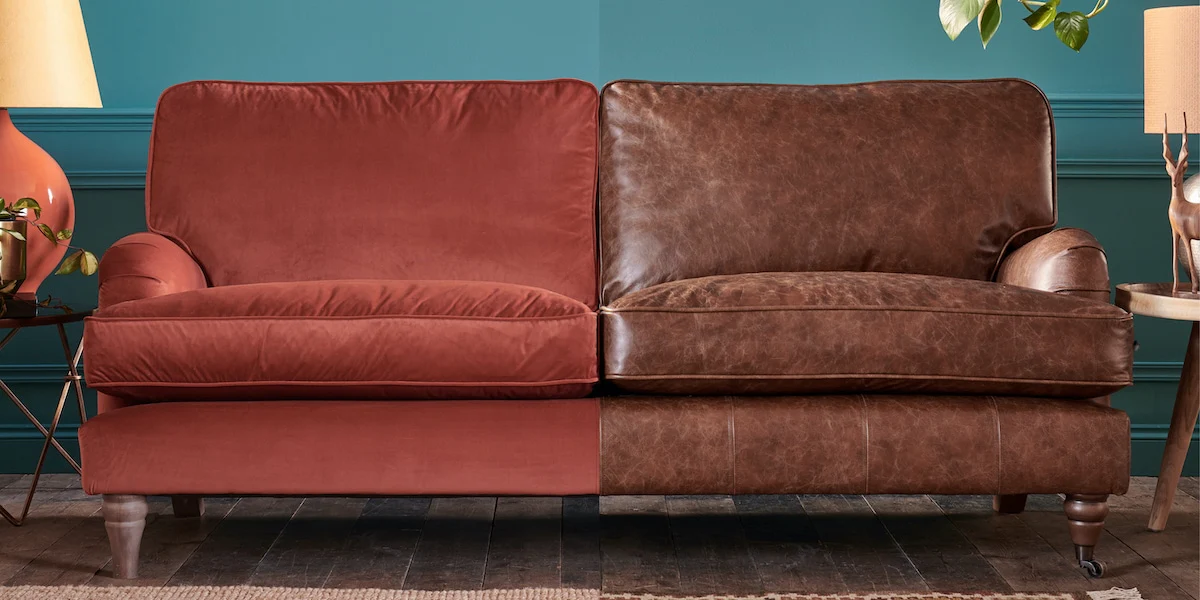
Leather (and Faux Leather)
Leather holds up well to daily use, wipes clean in about 30 seconds, and doesn't trap pet hair. It also ages well — quality leather develops character over time rather than just looking worn. The downsides: it can feel cold in winter and warm in summer, especially faux leather. And it doesn't have that sink-into-the-cushions softness that some fabric sectionals have. If you run warm or live somewhere that stays hot, fabric might honestly be more comfortable for everyday use.
Restored leather sectionals at Finity typically run $700–$1,100. The same piece new would cost $2,000–$3,500 at retail — often more.
Fabric (Microfiber, Velvet, Woven)
Fabric sectionals are generally more comfortable for long lounging sessions. Microfiber is the most practical option for most households — tight weave, forgiving on spills, holds up well to regular use. Velvet looks beautiful but needs more attention to keep it that way.
If you have pets, pay close attention to weave type. Loop fabrics and open textures trap fur and are a genuine pain to keep clean. Look for tight, flat weaves — they're much more pet-friendly and still look great.
Why a Restored Sectional Makes More Sense Than Buying New
Brand new furniture has exactly one thing going for it: it's factory-sealed. That's it. Genuinely, that's the whole advantage.
Here's what you're actually paying for when you buy new from a furniture store: the showroom, the advertising budget, and the brand name on the hang tag. None of those things go home with you. A sectional that costs $2,500 at retail often has a production cost under $400 — the rest is markup all the way down.
And here's something most people don't think about: older furniture was often built better. Real wood frames, denser foam, higher-quality construction. A lot of what's sold at budget retailers today is particleboard frames and thin cushions that compress flat inside a year. The restored sectional you're getting from us at $650 was likely built to a higher standard than what you'd buy new at $1,200.
We clean and inspect every piece before delivery — frames, springs, cushions, support structure, all of it. And we photograph honestly. If there's any visible wear on a piece, you'll see it in the listing photos before you ever talk to us. No surprises on delivery day.
Got Your Measurements? Let's Find Your Sectional.
Every piece is professionally cleaned, structurally inspected, and available with same-day local delivery across the Yuba City area.
Frequently Asked Questions
-
For a 12×12 room, look for an L-shaped sectional where the main sofa runs 90–100 inches and the chaise is 60–70 inches. That leaves walkway room on both sides. A U-shape would be too large for this footprint — the room would feel like one big couch and nothing else.
-
Neither is better — it depends entirely on your room layout. Stand at your room entrance facing where the sectional goes. The chaise should point toward the nearest wall or corner, not across a walking path. That direction tells you which facing to order.
-
Usually yes. Most sectionals come apart into individual sections that can fit through a 32-inch doorway. That said, some sections are large enough that 32 inches is tight. Measure both the door width and the depth of the door frame — the actual opening is a bit smaller than the door itself.
-
Every piece at Finity goes through professional deep cleaning, sanitizing, and deodorizing before it leaves our hands. We don't sell anything we wouldn't put in our own homes. Everything's photographed honestly — if there's any wear, you'll see it in the listing before you ever reach out to us.
-
The general rule is 1.5× the TV's diagonal screen size. For a 65-inch TV, that's about 8 feet. Most living rooms naturally land between 6 and 10 feet, which works well for screens from 55 to 75 inches — so most people are already in the right range without thinking about it.